

By Cristina Andreoni – CEO ELAN
Cabling Quality, Performance, and Technical Choices
In the network infrastructure sector, the choice of data cable is a strategic factor in ensuring reliability, service continuity, and long-term performance. Today, with the increasing transmission speeds required by corporate networks, IP video surveillance systems, smart buildings, and industrial applications, selecting a simple “Ethernet cable” is no longer sufficient. Technical specifications, compliance with regulations, and construction quality must all be carefully evaluated.
ELANDATA data cables are designed precisely with this objective in mind: to provide certified performance, safety, and ease of installation in compliance with international standards.
One of the most important aspects concerns the copper conductor size used inside the cable. A genuine CAT6 cable compliant with international standards features 23 AWG pure copper conductors. However, the market is increasingly flooded with low-cost alternatives that use smaller conductor sizes or are manufactured with CCA (Copper-Clad Aluminum). This type of product can compromise network performance by increasing attenuation, signal loss, and the risk of overheating, particularly in PoE (Power over Ethernet) applications. In addition, the greater fragility of the conductor increases the likelihood of cable failures and interruptions.
The actual quality of a data cable cannot be assessed solely through its datasheet or external appearance—it must be measured. For this reason, the FLUKE test remains the international benchmark for network performance verification. This testing procedure allows key parameters such as attenuation, crosstalk, and transmission capability to be evaluated, ensuring that the installed cabling truly meets the declared performance specifications.
Another crucial factor is selecting the appropriate cable according to the required speed and frequency. Modern networks demand increasingly higher bandwidths, making the use of certified components essential to prevent bottlenecks and performance degradation. Choosing the correct category—CAT5e, CAT6, or higher—should therefore take into account not only current requirements but also future network expansion needs.
Safety, Regulations, and the Value of the ELANDATA Solution
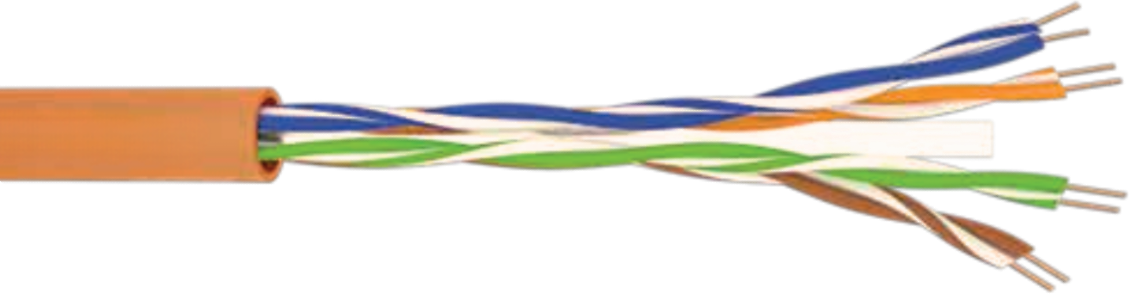
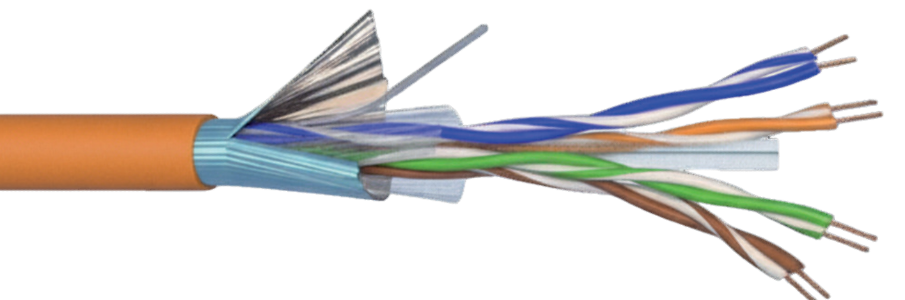
From an installation perspective, it is equally important to evaluate whether to use unshielded UTP cables or shielded FTP cables. UTP cables are ideal for standard installations in environments with low electromagnetic interference, whereas FTP cables provide superior protection in industrial settings or areas exposed to electrical disturbances. The ELANDATA range is available in both configurations to meet a wide variety of project requirements.
Particular attention should also be paid to fire safety regulations. Today, cables installed within buildings must comply with the CPR (Construction Products Regulation), which classifies the fire reaction performance of construction materials. ELANDATA cables are available with a Cca-s1a, d0, a1 classification, ensuring excellent performance in limiting flame propagation, reducing smoke emissions, and preventing the formation of flaming droplets. This is a fundamental requirement in public, industrial, and commercial environments where the safety of people is a top priority.
Finally, installation practicality represents a tangible advantage for installers and system integrators. The ELANDATA Box, equipped with an internal cable dispenser, enables more organized cable handling during installation, reducing labor time, waste, and the risk of product damage.
In a market where price often appears to be the sole purchasing criterion, it is important to remember that an efficient network infrastructure begins with the quality of its components. Investing in certified cables that comply with regulations and are engineered to deliver genuine performance means creating installations that are safer, more reliable, and built to last.